There are over 200 recognised breeds of chicken around the World but not all hens are equal in their laying ability so if you would like chickens for eggs, look at my top 10 laying hens below first. It is commonly accepted that all chickens decended from the Jungle Fowl. Pure breeds of chicken have been developed over many hundreds, even thousands of years from the Jungle Fowl (although science is still challenged by the Auraucana that lays blue eggs).
A Little History of Laying Hens
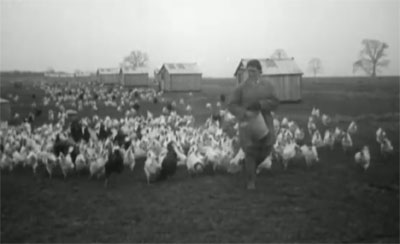 Before the First World War, ducks were the better egg layers and chicken breeds that layed 100 eggs or more per year were considered good layers. Most of the development of pure bred laying hens came after the Second World War when there were many laying trials and tests and it was common for breeders to ‘trap nest’ hens to record their individual output so that they could be used to produce further generations of laying hens.
Development of the ‘Hybrid’
The developments with pure breeds were soon to be followed by hybrid (a cross of pure breeds) laying hens. There were millions of pounds spent during the 1950’s on creating hybrids that were not only capable of laying more eggs but also had a good feed conversion.
During this development, the parent flocks that created these hybrid layers were becoming a different ‘strain’ of their own because hens were selected for egg production rather than the way they looked.
Interestingly, duck eggs could have been on our breakfast table rather than chickens eggs… but they did not do well kept in confined conditions like chickens.
 My Top 10 Chickens for Eggs
The following table lists my top 10 laying hens (a mixture of hybrids and pure breeds) and gives an estimate of the number of eggs they are capable of producing if kept in the right conditions.
Note that there are many different strains of hens from different breeders that will perform differently… egg numbers can vary on a number of other factors too, particularly with feeding and daylight levels.
Exhibition strains that have been closely bred are not usually selected for their egg laying performance. Try to purchase hens from a good ‘Utility Strain’. There are some breeders that advertise utility strains and the number of eggs they expect from their strain every year.
Hybrids are much more reliable at producing a given number of eggs and are bred mainly for this purpose.
1. Goldline (Hybrid)
The ultimate egg machine. This little commercial brown hen will lay up to 320 large brown eggs in her first year. They have a good feed ratio and are very similar to the birds used on farms to produce eggs for the consumer market. A very friendly bird that will be in your house if the door is left open!
2. White Leghorn (Pure Breed)
Small attractive birds with a good feed efficiency that lay up to 300 large white eggs in their first year. These are the standard commercial hen used in the U.S. for egg production (because white eggs are preferred). They can be quite flighty and can fly well so make sure they can be kept securely before you buy them or clip a wing to keep them on the ground.
3. Nera (Hybrid)
Hardy birds that are great foragers and layers of a good quality large brown egg. The Nera is a cross between a certain strains of Rhode Island Red and Barred Plymouth Rock, originating in Scotland. You can expect around 270 eggs in their first year.
4. Amber (Hybrid)
The Amber is a Rhode Island Red based hybrid that looks attractive and has very soft feathering. She is a fantastic layer of up to 300 medium eggs in her first year.
5. Speckledy (Hybrid)
The Speckledy is a flecked dark hen, a cross of a Rhode Island Red and Marans. She lays around 270 large dark brown eggs in her first year.
6. Rhode Island Red (Pure Breed)
The Rhode Island Red is a good layer of up to 220 large brown eggs in their first year. Be sure to get a utility strain though as these are a popular show bird.
7. Marans (Pure Breed)
Good layers of medium to large dark brown eggs. Copper Black Marans seem to be the best layers laying up to 200 eggs in a year. They are often good winter layers, with pullets coming into lay during January.
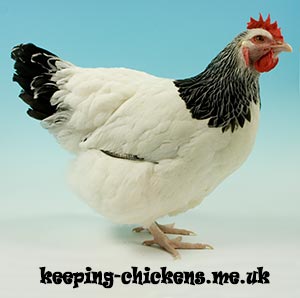
8. Light Sussex (Pure Breed)
Attractive birds that will reward you with up to 200 medium tinted eggs.
9. Araucana (Pure Breed)
Araucanas are very unique looking. They initially came from Chile in South America. The Araucana lays around 200 medium sized blue to bluish-green
10. Crested Cream Legbar (Pure Breed)
An attractive hen with a small crest that will lay up to 180 medium sized blue to bluish-green eggs that will add a little colour to your egg boxes.


Hi … I’ve had my 3 goldline hens for a week now , they are 23 weeks old so hopefully should start getting eggs soon. I’m feeding them on layer pellets with added scraps from our kitchen and they have taken a liking to the herbs and lavender I grow in pots. They have free roam of the garden for most of the day so are eating a fair amount of grass also. After just reading the grit section I’m now going to mix the oyster shell with the chick grit I give them.
Great site
Arron
I have two hybrid ‘bluebells’ who are massive, docile, a bit lazy and very friendly ( good kid friendly hens) and one ‘black rock’ who is a bit smaller and less trusting but an expert digger and forager ( she leads the blues to forage sites) I get two to three eggs a day from them all and they have a 30m x 30m fully wired forage area edged by hazel, hawthorn, wild rose, bramble and honeysuckle. Bluebells are great big softies who will come running the minute you call and follow you about, they don’t like to be grab handled but do like being hand fed and petted gently. Black rock is a hater of all things children and human, more likely to have your eye out than be friendly, but she is an excellent layer and gets the bluebells off their backsides and digging daily. Black rock is also tough as a boot in rain or snow, have seen her out in all weathers digging, whilst the blues are fiddling about in their shelter like ladies of leisure. Wish I had space to have more, because they are fascinating like mini dinosaurs. Thanks for posting all the pure breed info, am newly fascinated.
Yes, there are certainly different temperaments and characteristics that come out. I’ve got some Bovans Nera / Black Rock and they do like to wander and forage further afield and without doubt, they will scratch around causing the most damage. Ideal for free range / farm for sure.